Chimpanzee Trekking in Queen Elizabeth National Park
Chimpanzee Trekking in Queen Elizabeth National Park is an engaging activity offered within Kyambura Gorge, a section of this iconic Ugandan wildlife reserve. As part of Uganda safaris, this trek allows visitors to observe habituated chimpanzees in their natural habitat, featuring dense forests and diverse ecosystems. Queen Elizabeth National Park, one of the best places to visit while in Uganda, provides this unique wildlife interaction alongside other attractions, including game drives and birdwatching. The trekking process involves guided tours where participants track chimpanzees by following vocalizations and movement, offering a rare chance to learn about their behavior and conservation. Permits are required for chimpanzee trekking, and the activity is accessible for visitors with moderate physical fitness.
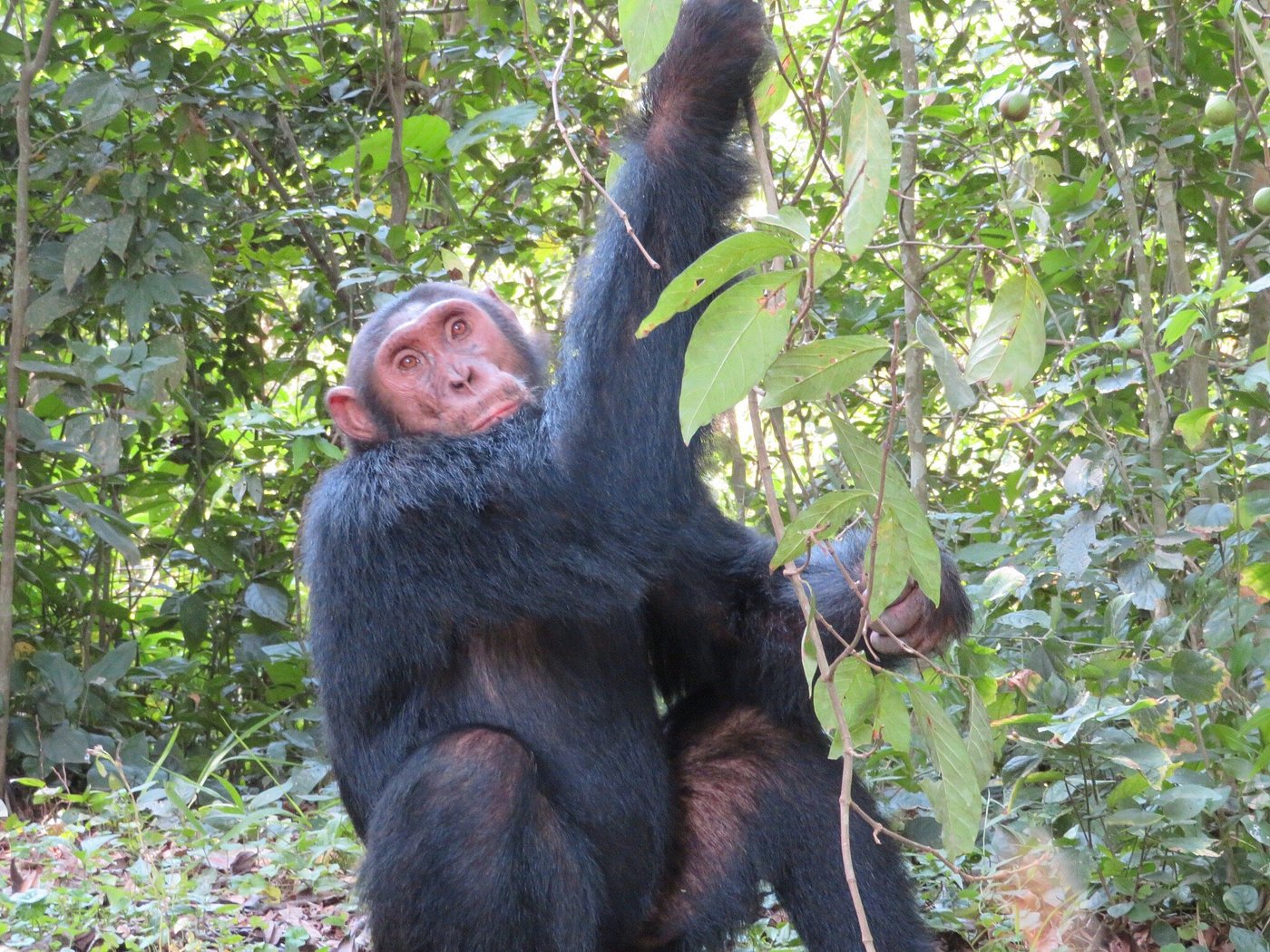
What is chimpanzee trekking, and how does it differ from gorilla trekking?
Chimpanzee trekking is an outdoor activity where visitors walk through forests to find and observe chimpanzees in their natural habitat. Chimpanzees are highly intelligent and social animals, living in groups called troops. During a trek, visitors follow trained guides or rangers who know the forest trails and can identify signs like calls, nests, or broken branches that suggest chimpanzees are nearby. Once located, visitors usually get around one hour to watch and learn about them while maintaining a safe distance.
Gorilla trekking is similar in setup, but the goal is to observe mountain gorillas instead of chimpanzees. Mountain gorillas are larger, more powerful, and live in smaller family groups compared to chimpanzees. One key difference lies in behavior and movement: chimpanzees are very agile and tend to swing from trees and move about constantly, making them a bit harder to track. On the other hand, gorillas are less active and spend a lot of time on the ground.
Another noticeable difference involves where the two activities take place. Chimpanzee trekking is common in lower forests and diverse types of vegetation, while gorilla trekking usually happens in high-altitude mountain regions like Bwindi Impenetrable Forest. Lastly, permits for gorilla trekking tend to be much more expensive and harder to secure than permits for chimpanzee trekking due to limited populations and fewer gorilla trekking locations globally.
For example, popular places to see chimpanzees include Kibale Forest and Queen Elizabeth National Park in Uganda, whereas gorilla trekking is famous in Rwanda’s Volcanoes National Park. Chimpanzee trekking is generally more accessible and budget-friendly than gorilla trekking, though both are uniquely rewarding experiences for wildlife enthusiasts.
Where exactly can chimpanzee trekking be done in Queen Elizabeth National Park?
In Queen Elizabeth National Park, chimpanzee trekking is primarily done in the Kyambura Gorge, a scenic and lush valley located in the park’s southern sector. The gorge is sometimes referred to as the “Valley of Apes,” and it serves as an excellent location to see chimpanzees due to its special ecosystem. It is formed by the Kyambura River that runs through it, creating dense forests where chimpanzees and other wildlife thrive.
The Kyambura Gorge is relatively small compared to some other chimpanzee habitats, extending about 16 kilometers long and 100 meters deep. This manageable size increases the likelihood of finding the chimpanzees during a trek. Rangers stationed in the area are familiar with the gorge’s chimpanzee group and their movements, making it a reliable trekking spot.
Besides Kyambura Gorge, Queen Elizabeth National Park as a whole is known for its biodiversity. If lucky, visitors trekking in the gorge may also spot other animals, such as baboons, monkeys, and birds. While chimpanzee trekking isn’t available in other parts of the park, the location of Kyambura Gorge makes it conveniently accessible for visitors exploring Queen Elizabeth’s many attractions, like the Mweya Peninsula or the Kazinga Channel.
For example, if one is staying at lodges on the Mweya side of the park, reaching Kyambura Gorge would typically involve a short drive. Visiting chimpanzees in Kyambura Gorge offers a different experience compared to other trekking sites in Uganda, as the combination of the gorge’s forested trails and the chance to encounter some of the park’s rich wildlife diversity creates a unique adventure.
What is the Kyambura Gorge, and why is it significant for chimpanzee trekking?
The Kyambura Gorge is a unique natural formation located in Queen Elizabeth National Park, Uganda. It is a steep, forested valley created by the flow of the Kyambura River. Sometimes described as an underground forest due to the dramatic difference between the flat savannah above and the verdant, tree-filled gorge below, it is a key destination for wildlife enthusiasts.
The gorge is significant because it is home to a small, isolated community of chimpanzees. Unlike other trekking spots like Kibale Forest, where larger chimpanzee populations reside, the Kyambura Gorge presents a unique scenario. Chimpanzees living here are almost entirely surrounded by human settlements and the savannah, which has cut them off from connecting with other chimpanzee groups. This makes the Kyambura Gorge chimpanzees particularly fascinating to observe, as their behavior often reflects the challenges of living in this fragmented habitat.
For visitors, the Kyambura Gorge offers an accessible and scenic trekking environment. It’s not only about chimpanzees, the gorge also supports other wildlife like baboons, colobus monkeys, and an impressive range of bird species. Its lush environment filled with towering trees, moss, and emerald vegetation stands in stark contrast to the rest of Queen Elizabeth National Park’s grasslands and watery expanses.
Finally, the conservation importance of the gorge cannot be overstated. The chimpanzees in Kyambura Gorge are part of a restoration effort to maintain their population despite isolation. Trekking here supports these conservation initiatives by funding ranger programs and habitat preservation, making it an impactful way for tourists to engage with wildlife respectfully.
Visitors are encouraged to explore the gorge not just for chimpanzees but to appreciate its striking natural beauty and ecological importance in helping protect rare species.
What is the best time of the year to go chimpanzee trekking in Queen Elizabeth National Park?
The best time for chimpanzee trekking in Queen Elizabeth National Park is during the dry seasons. The dry seasons typically occur twice a year: from June to September and from December to February. These months are ideal because the trails in the trekking areas, such as Kyambura Gorge, are less muddy and slippery compared to the rainy seasons. This makes it easier and safer to hike through the forest as you search for the chimpanzees.
In the dry seasons, the forest canopy also becomes less dense, which improves visibility when spotting chimpanzees. Chimpanzees tend to move around more openly during this period because food sources are more concentrated. This increases the likelihood of better sightings.
On the other hand, the rainy seasons, March to May and October to November, can make trekking more challenging. The trails in the gorge may become slippery with heavy rains, and visibility might be reduced. However, the rainy seasons can also bring abundant food to the forest, which sometimes results in chimpanzees staying closer to one location, making them easier to find.
To sum up, while it is possible to go trekking year-round, the dry seasons provide the most comfortable and predictable conditions. If flexibility in travel plans is possible, aim for June to September or December to February for the best experience.
How physically demanding is chimpanzee trekking, and what level of fitness is required?
Chimpanzee trekking in Queen Elizabeth National Park can vary in physical difficulty, depending on the group’s location and the terrain of the day. The trekking generally requires a moderate level of fitness because it involves hiking through forests, navigating uneven ground, crossing streams, and sometimes climbing gentle slopes. Treks can last anywhere from 2 to 4 hours, or even longer, depending on how quickly the chimpanzees are located.
The Kyambura Gorge, a popular spot for the trekking activity, has steep sides, so descending into and climbing out of the gorge can be challenging. Once inside the forest, trekkers might encounter thick vegetation, which can slow down movement. As a result, being comfortable with walking for extended periods and handling uneven, slippery, or muddy terrain is important.
For those concerned about fitness, it is helpful to practice simple activities like daily walking, light hiking, or stair climbing before the trip. Trekking guides usually move at a manageable pace and allow for rest breaks, so you don’t have to worry about feeling rushed. It’s more about endurance than speed.
Participants who have limited mobility but still wish to enjoy a chimpanzee encounter can discuss options like shorter treks or hiring porters to assist with carrying bags and offering support. Overall, being in reasonable health and having good walking shoes can make the adventure more enjoyable.
What permits are needed for chimpanzee trekking, and how can they be obtained?
Chimpanzee trekking in Queen Elizabeth National Park requires purchasing a chimpanzee trekking permit, which grants visitors official permission to enter the designated trekking areas and spend time observing these primates. These permits serve as a way to regulate visitor numbers to minimize disturbance to the chimpanzees and support conservation efforts within the park.
Permits for Kyambura Gorge, one of the main trekking hubs, can be obtained through the Uganda Wildlife Authority (UWA). You can purchase permits in person at UWA offices in Uganda or by contacting an authorized tour operator who can make the arrangements for you on your behalf.
The permit ensures a one-hour viewing experience with a chimpanzee group after they are located. The cost typically includes the park entry fee and the services of experienced guides and trackers.
It’s crucial to book permits well in advance because the number of visitors per day is limited to prevent overcrowding. During the peak seasons (June to September and December to February), permits may sell out quickly due to higher visitor demand.
If you’re not in Uganda and prefer to plan ahead, many travel companies specialize in organizing trekking itineraries that include permits. Make sure to provide accurate information, such as travel dates, so your spot is guaranteed.
What are the costs associated with chimpanzee trekking in Queen Elizabeth National Park?
The cost of chimpanzee trekking in Queen Elizabeth National Park depends on factors like the permit price, guide fees, and associated personal expenses. The permit to trek chimpanzees generally costs about $50–$100 per person, depending on whether you’re a foreign tourist, an East African national, or a resident with local discounts. This is different from gorilla trekking, whose permits are far more expensive, often exceeding $700.
In addition to the permit, there might be mandatory guide fees included in your payment. Since the treks are organized and guided by experienced rangers, part of the cost ensures your safety and supports conservation efforts in the national park. Some trekking experiences also include tips for trackers or guides, so travelers often budget an extra $5–$20 per person as a tip.
Other costs might involve transportation. Since Queen Elizabeth National Park is relatively large, many visitors prefer using a tour operator, which could cost more depending on the package chosen. For instance, these operators often include additional services like transport to the Kyambura Gorge or other trek locations.
Accommodation during your stay can vary; options like budget lodges, mid-range hotels, or luxury camps are available near the park. Lodging costs can range from $30–$500 per night, so choosing based on your budget is important.
Lastly, don’t overlook miscellaneous expenses like binocular rentals (if needed), snacks, water, or gear. Adding everything, many travelers spend between $100–$500 for the entire experience, excluding airfare.
How long does a typical chimpanzee trekking experience last?
A typical chimpanzee trekking experience in Queen Elizabeth National Park usually lasts 2–4 hours, though this can vary depending on the location of the chimpanzee troop that day. The trek begins early in the morning or afternoon, as those are prime hours when chimpanzees are active and easier to track.
The experience starts with a brief orientation session held by the guides and rangers. In this, you’ll learn the basic rules of tracking chimps and gain some essential safety tips about the gorge or forests you’ll explore. This preparation takes about 30 minutes.
Once the orientation wraps up, the actual trekking begins. Since chimpanzees are wild and mobile, finding them requires walking varying distances through forest trails. The time it takes to locate the group depends on their daily movements, which are influenced by food availability, weather, or social behavior. Most visitors are able to spot the chimpanzees within 1–2 hours of walking.
Once the chimpanzees are found, visitors are allowed to spend up to one hour observing them. During this time, you’ll see their unique behaviors, such as feeding, grooming each other, or even vocalizing loudly in their social groups.
The trek’s duration also takes into account the path back to the briefing point. Keep in mind that factors like group size, fitness levels, or unexpected weather changes might add extra time to the full experience. Despite this, most treks are concluded well within half a day, leaving visitors ample time to relax or explore other parts of the park.
What wildlife and natural sights, apart from chimpanzees, might be encountered during the trek?
While the main focus is spotting chimpanzees, trekking in Queen Elizabeth National Park offers opportunities to see other wildlife and natural wonders found in the Kyambura Gorge or surrounding areas. As you navigate the dense greenery, you’ll be exposed to an astonishing array of biodiversity.
One of the common sights includes various monkey species, such as black-and-white colobus monkeys, vervet monkeys, and red-tailed monkeys. These primates often share portions of the forest with chimpanzees, so they’re frequently spotted during treks. Lucky visitors may even catch sight of baboons.
The gorge is also home to numerous bird species, making it a haven for birdwatching enthusiasts. Birds such as the African fish eagle, malachite kingfisher, and black bee-eaters are frequently encountered. Carrying a pair of binoculars increases the chances of spotting even smaller or distant species.
On the forest floor, you might notice smaller creatures like butterflies and unique insects. Plus, the gorge’s thick vegetation is filled with diverse tree species, including those used by chimpanzees for nesting or feeding. Many guides take opportunities to explain the ecology of the area, pointing out medicinal or ancient trees.
Occasionally, people spot large animals like forest antelope (duikers) or even warthogs. Additionally, reptiles such as forest lizards or harmless snakes may cross the trails.
Natural highlights also include the lush, steep slopes of Kyambura Gorge, often called the “Valley of Apes.” This area contains a river cutting through the landscape, which provides a striking backdrop of natural beauty. The contrast between its dense tropical forest and surrounding savannah grasses makes it stand out, adding excitement to your trek.
What ethical or conservation considerations are involved in chimpanzee trekking?
One of the main ethical considerations in chimpanzee trekking is the impact on the forest and the chimpanzees themselves. Chimpanzees are wild animals, and human interaction can disrupt their natural behaviors, introduce diseases, and stress them. To minimize this, forest officials and researchers often implement strict rules to balance tourism and conservation.
For instance, keeping a distance of at least 7-10 meters from the chimpanzees helps reduce the chance of disease transmission since humans can unknowingly pass viruses or bacteria to these primates. Chimpanzees have immune systems similar to humans, so illnesses like the flu can harm them severely.
Another conservation consideration is controlling the number of visitors allowed into the trekking zones each day. This prevents overcrowding, which could disturb the natural habitat and create negative experiences both for visitors and the animals. To support these efforts, permits often come with fees that help fund conservation projects, research, and park management. This ensures that the ecosystem supporting chimpanzees thrives and the animals remain safe.
Bushmeat hunting and deforestation threaten chimpanzees outside protected areas. By choosing ethical tours and operators that contribute to wildlife protection efforts, visitors indirectly support anti-poaching patrols and community education programs.
Additionally, habitat loss is a big problem. Eco-friendly travel options, including staying in sustainable lodges or using greener transportation methods, can help reduce visitors’ environmental footprints.
Community involvement also plays a role. When local communities see the financial benefits of protecting chimpanzees, they’re more likely to work toward conservation rather than engaging in harmful activities like logging or poaching. In this way, chimpanzee trekking can be a tool for improving relationships between conservation groups and local populations.
Are there any rules or guidelines to follow while interacting with chimpanzees during the trek?
Yes, strict rules and guidelines are in place to protect both visitors and chimpanzees during the trek. These aim to keep the chimpanzees safe while giving participants a chance to observe them without causing harm.
First and foremost, visitors must keep a minimum distance of 7-10 meters from the chimpanzees. This reduces the risk of transmitting diseases and also ensures the animals don’t feel threatened or cornered.
Wearing masks is another critical rule for preventing the spread of airborne pathogens to chimpanzees. Some trekking experiences may provide masks, but visitors should always carry their own just in case.
Loud noises or sudden movements are discouraged as they can scare or agitate the chimpanzees. It’s important to follow the guidance of the ranger and speak quietly, moving slowly and deliberately at all times.
If a chimpanzee approaches, don’t try to touch or feed it. Feeding them can disrupt their natural foraging habits, making them more dependent on human-provided food, which creates issues in the long run. Rangers will typically intervene if the animals get too close.
Photography is allowed but no flash should be used, as it may startle the chimpanzees. Visitors should double-check that their camera settings are correct beforehand.
Sticking with the group and following instructions from park guides or rangers ensures everyone’s safety. Trekking guides are highly trained and can identify when an animal is displaying signs of discomfort or stress.
Finally, overall hygiene is stressed. For instance, anyone feeling sick or unwell should report the issue to the ranger and avoid trekking altogether. Safeguarding the health of these endangered primates is the priority.
What should one pack or prepare for a successful chimpanzee trekking adventure?
Packing the right items and being prepared can make a huge difference during a chimpanzee trekking adventure. Here’s a detailed list of key essentials:
- Clothing: Wear lightweight, long-sleeved shirts and long pants to protect your skin from scratches, insect bites, and thorny bushes. Neutral colors like greens and browns are ideal to blend into the natural environment.
- Comfortable footwear: Sturdy hiking boots with good grip are necessary as the terrain can be uneven, muddy, or uphill. Avoid open-toed footwear.
- Rain gear: Since many trekking areas are in rainforest regions, unexpected rain is common. A lightweight rain jacket or poncho is highly advisable.
- Insect repellent: Mosquitoes and other insects are abundant, so use repellents containing DEET to avoid getting bitten.
- Water and snacks: Staying hydrated is crucial since trekking can be physically demanding. Carry at least 1-2 liters of water in a reusable bottle and pack easy-to-carry snacks like energy bars.
- Camera and binoculars: Many other animals and birds might be spotted along the way. Carry a good camera (with adjustable settings for low light) and binoculars for closer viewing.
- Backpack: A small, waterproof backpack is useful for carrying all your items securely.
- Sunscreen and hat: Even in dense forest environments, gaps in the tree canopy can expose you to the sun. Protect your skin with sunscreen and keep your head cool with a hat.
- Walking stick: Many trekking guides will provide this, but it’s helpful to have for stability, especially on steep or muddy paths.
- Mask: Bring a mask to comply with health guidelines and minimize germ spread to chimpanzees.
Fitness preparation is another part of getting ready. If you aren’t accustomed to hiking, practice walking for long periods on uneven ground before your trip. Being physically prepared will make the trek more enjoyable and less tiring. Also, research the weather conditions and read reviews or advice from others who’ve gone trekking in the same area.
Being well-prepared enhances safety, comfort, and the overall experience.
How To Book Your Safari in Uganda
Wondering what chimpanzee trekking in Queen Elizabeth National Park is all about, how it works, or why it’s worth doing? This guide answered it all! Get ready for an incredible experience with these fascinating primates in their natural habitat. Start planning your adventure today by contacting one of the trusted Uganda Safari Companies. They’ll help organize your trip, making it easy for you to enjoy this unforgettable activity.